11 Archaeological Discoveries Revealing Bharat's Central Role in Early World Civilisations
New epigraphic and archaeological findings from Egypt to Southeast Asia provide material proof of Bharat"s far-reaching maritime trade, religious influence, and linguistic legacy nearly two millennia ago.
Total Views |



From Egypt's royal tombs to Southeast Asia's temple corridors, new epigraphic and archaeological findings steadily reinforce what historians have long argued: India was not a peripheral civilisation, but a central node in early global trade, religion, and intellectual exchange.
Recent discoveries across Egypt, Vietnam, Nepal, Malaysia, Thailand, Pakistan-Occupied Kashmir, and even Germany reveal inscriptions in Tamil, Sanskrit, Brahmi, Pallava, and related scripts. These material remains provide compelling evidence of India's deep civilisational footprint nearly two millennia ago.
1. Tamil-Brahmi Inscriptions in the Valley of the Kings, Egypt
On 12 February 2026, scholars identified nearly 30 Tamil-Brahmi and Prakrit inscriptions inside tombs in the Valley of the Kings near Luxor.
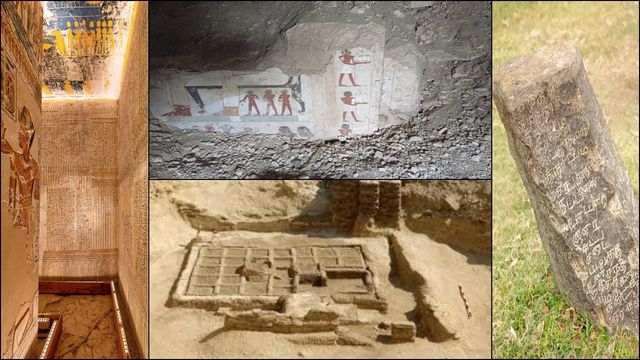
Decoded by Prof. Ingo Strauch and Charlotte Schmid, inscriptions in six tombs mention names such as "Cikai Korran" or Chikai Kotran, alongside phrases translating to "came and saw".
The implication is profound. Tamil traders did not merely dock at Red Sea ports. They travelled deep into pharaonic Egypt roughly 2,000 years ago. These findings significantly strengthen evidence of Indo-Egyptian-Roman maritime networks in the early centuries CE.
2. Sacred Ceremonial Road at My Son, Vietnam
Excavations conducted between 2023 and 2025 at My Son Sanctuary uncovered a paved ceremonial road linking Tower K to the main temple cluster.
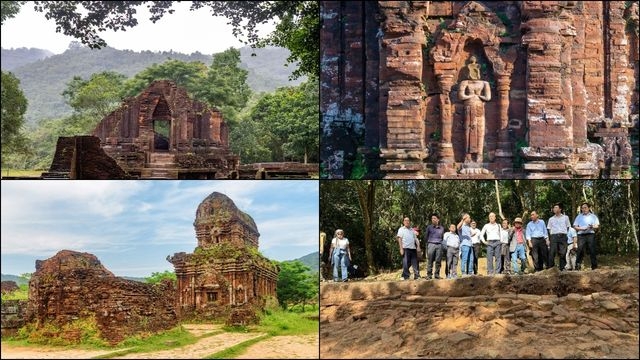
A UNESCO World Heritage Site, My Son served as the spiritual heart of the Champa kingdom. The sacred pathway, active from the 10th to the 12th centuries CE, facilitated Shaivite processions and royal rituals. Its design reflects Indic temple cosmology and ritual architecture, demonstrating how Indian religious frameworks shaped Southeast Asian sacred landscapes.
3. Tamil-Roman Trade Evidence at Berenike
Recent excavations at Berenike and Quseir al-Qadim yielded Tamil-Brahmi inscriptions on pottery, confirming a sustained Tamil merchant presence in Roman Egypt during the Sangam era.
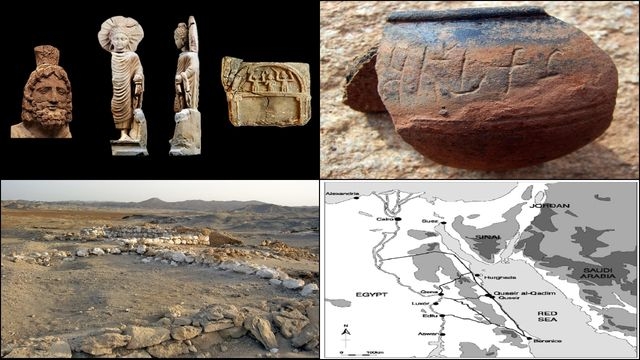
Spices, pearls, textiles, and gemstones travelled westward, while Roman gold and wine moved eastward. Egypt functioned as a crucial transit hub linking the Indian Ocean to the Mediterranean world.
These discoveries underscore that Tamil merchants were not marginal participants, but central actors in early global commerce.
4. Andhra Copperplate in Munich and Shell Script in Kadapa
A 9th to 10th century Eastern Chalukya copperplate charter preserved in the Bavarian State Library records village grants in Sanskrit written in Telugu script. This document demonstrates structured governance, administrative literacy, and formal record-keeping traditions.
Meanwhile, rare 6th-century Shell-script or Sankh Lipi inscriptions discovered in the forests of Andhra Pradesh indicate pilgrimage traditions that predate major dynastic expansions.
Together, these findings reveal administrative sophistication and devotional networks that extended across regions and, through preservation abroad, even across continents.
5. Fourth-Century Sanskrit Inscription near Gilgit
A Brahmi-script Sanskrit inscription discovered near Gilgit mentions the installation of a Maheshvara linga by an individual named Pushpasingha.
This inscription confirms active Shaivite worship in the region during the early centuries CE. Earlier Sharada inscriptions referencing Buddhist dharani chants further demonstrate Hindu-Buddhist coexistence in this frontier zone of Indic civilisation.
6. ASI Decodes Sanskrit Records in Vietnam and Nepal
The Archaeological Survey of India decoded:
- A third-century Brahmi inscription on a ring from southern Vietnam.
- A sixth-century Shivling inscription in Nepal naming Lichhavi rulers.
These findings demonstrate that Sanskrit functioned as a cosmopolitan language of religion, kingship, and legitimacy across South and Southeast Asia.
7. Ancient Buddha Statue in Kedah, Malaysia
At Bukit Choras in Kedah, Malaysia, archaeologists unearthed an eighth to ninth century stucco Buddha statue bearing Sanskrit inscriptions.
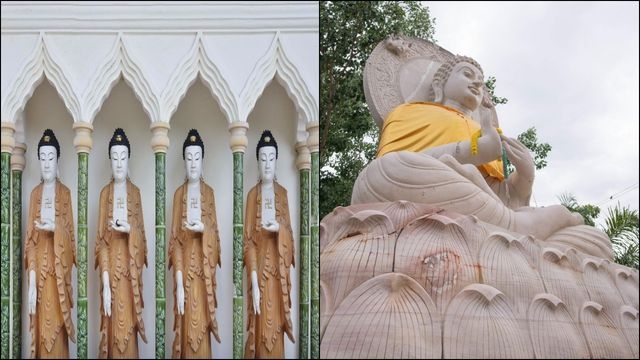
Predating monumental complexes such as Angkor Wat, the discovery highlights Kedah Tua's role as a maritime and religious hub connected to Indian trade networks.
8. Bhadravarman Inscription in Vietnam
A fourth-century CE Sanskrit inscription near Nhan Tower records that Champa king Bhadravarman constructed a Shiva temple.
The inscription demonstrates the adoption of Indic temple patronage models, royal titulature, and Shaivite theology within Southeast Asian polities.
9. Phanom Rung Temple Inscriptions, Thailand
At Phanom Rung Historical Park, eight inscriptions in Sanskrit and Old Khmer describe temple construction and devotion to Shiva.
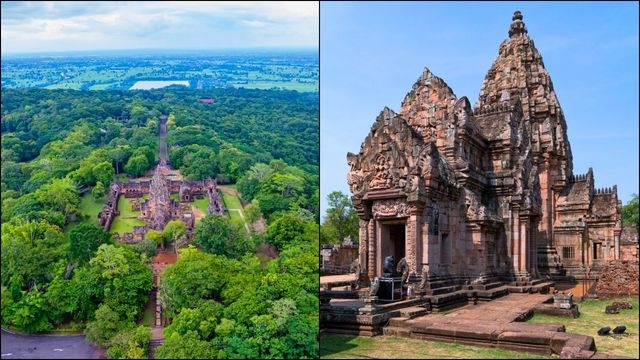
The temple symbolically represents Mount Kailash, illustrating theological transfer and architectural replication across the Bay of Bengal. The inscriptions reveal how Indic religious cosmology integrated into local Khmer traditions while retaining core philosophical concepts.
10. Ninth-Century Shiva Linga at My Son
During conservation efforts at My Son Sanctuary, the Archaeological Survey of India unearthed a monolithic sandstone Shiva linga.
The discovery reinforced the civilisational continuum linking India and Vietnam. External Affairs Minister Subrahmanyam Jaishankar described it as a testament to enduring cultural cooperation and shared heritage.
11. Epigraphic Proof of Tamil Antiquity
Research highlighted in The Hindu documents Tamil-Brahmi inscriptions dating to the third century BCE.
These inscriptions, found in caves, pottery, and temples, confirm Tamil as one of the world's oldest continuously used classical languages. They provide extensive documentation of trade networks, religious practices, and administrative systems, demonstrating an advanced and literate society deeply engaged in regional and transregional exchange.
What Do These Discoveries Establish?
1. Maritime Mastery
Indian traders navigated expansive Indian Ocean networks linking Rome, Egypt, Southeast Asia, and beyond.
2. Cultural Transmission Without Conquest
Indic influence spread primarily through commerce, pilgrimage, scholarship, and temple patronage rather than military domination.
3. Sanskrit as a Cosmopolitan Language
Much like Latin in medieval Europe, Sanskrit functioned as a civilisational connector across large parts of Asia.
4. Tamil's Global Footprint
Tamil merchants and inscriptions demonstrate early global mobility from the Sangam era onwards, supported by tangible epigraphic evidence.
5. Religious Pluralism
Shaivism, Vaishnavism, and Buddhism travelled through peaceful exchange, embedding themselves within local cultures while allowing regional adaptation.
Taken together, these discoveries move the discussion beyond cultural pride or literary tradition. They provide material, epigraphic, and archaeological proof that India played a foundational role in shaping early interconnected civilisations across Afro-Eurasia.
Written by

Kewali Kabir Jain
Journalism Student, Makhanlal Chaturvedi National University of Journalism and Communication