The Living Legacy of Indian Army Regimental Songs
Each regiment’s song tells a story of blood, honour, and survival, preserving military heritage that formal histories often overlook.
Total Views |


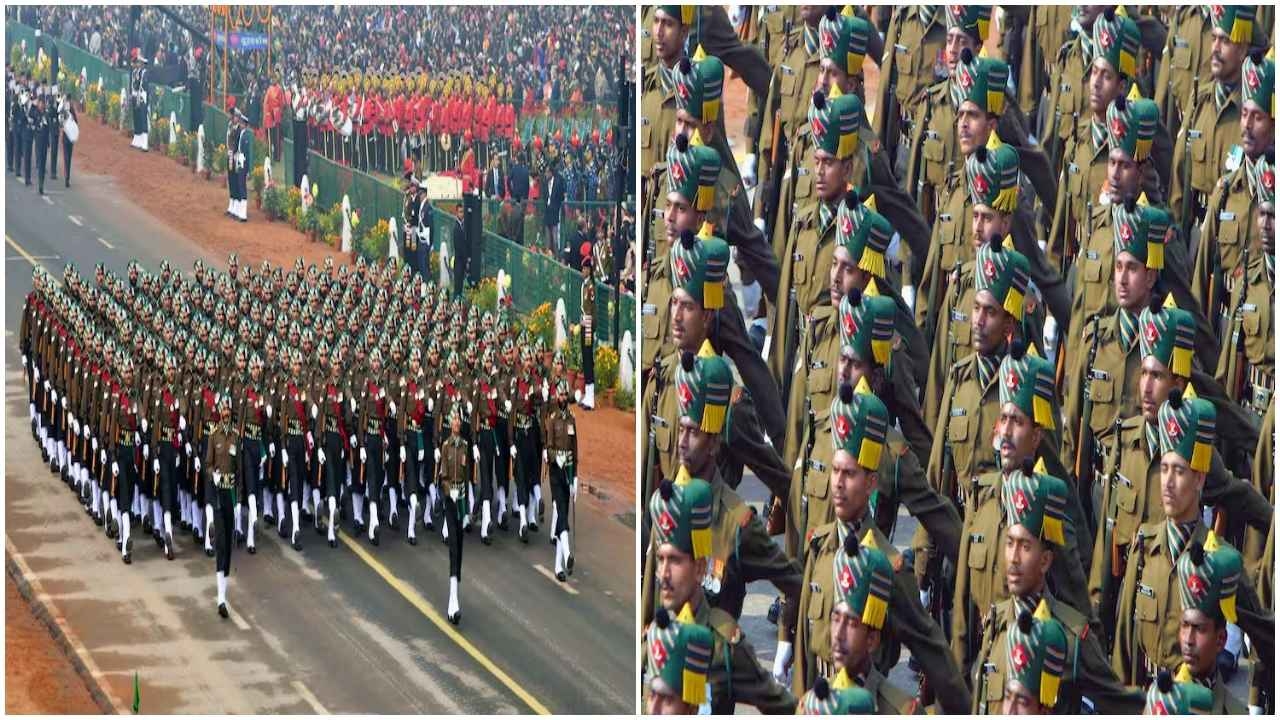
On Republic Day 2026, as the Assam Regiment marched down Kartavya Path to the haunting refrain of Badluram Ka Badan, a regimental company song born in the jungles of World War II Burma, the moment struck a deep national chord. What had long remained an internal military tradition suddenly captured nationwide attention. Many citizens began asking why Indian Army regiments sing such songs, where these war cries originate, and why they continue to endure across generations of soldiers.
The answers lie not in conventional history books, but in lived experience shaped by blood, sacrifice, faith, and folklore.
Songs Forged in Combat
Regimental songs and war cries in the Indian Army do not exist as ornamental relics. Soldiers use them as functional tools of morale, discipline, and collective identity. Each tradition emerges from real battlefield experiences and remains deeply rooted in the cultural landscape from which a regiment draws its soldiers. Whether troops shout them during an assault, sing them on a route march, or hear them played by a military band on parade, these traditions bind individuals into cohesive fighting units. In the process, they transform regional identities into a shared national ethos.
Assam Regiment: Badluram Ka Badan and the Memory of Kohima
Raised on 15 June 1941 during World War II, the Assam Regiment came into being to harness the jungle warfare skills and resilience of the tribal communities of Northeast India. Its legendary company song Badluram Ka Badan traces its origin to the Battle of Kohima in 1944. Rifleman Badluram of 1 Assam fell in action at Jessami while holding back the Japanese advance. Even after his death, the system continued to draw his rations, which accumulated unnoticed. When the siege of Kohima cut off supplies, these rations helped the company survive. In 1946, Major M T Proctor immortalised this episode in song, set to the tune of John Brown’s Body.
"Badluram Ka Badan", the regiment song of the Assam Regiment of the Indian Army.
— Rishi Bagree (@rishibagree) January 26, 2026
The best thing on the internet right now. pic.twitter.com/aD97BcoDDo
What may sound darkly humorous to civilians serves as a stark reminder of sacrifice and survival for soldiers. Sung during attestation parades in Shillong, the song remains inseparable from the regiment’s war cry, Rhino Charge.
Madras Regiment: Valour Echoing Since the Eighteenth Century
Among the oldest infantry regiments, the Madras Regiment traces its lineage to 1758. Its war cry Veera Madrassi, Adi Kollu, Adi Kollu! officially adopted in 1969, reflects uncompromising battlefield aggression.
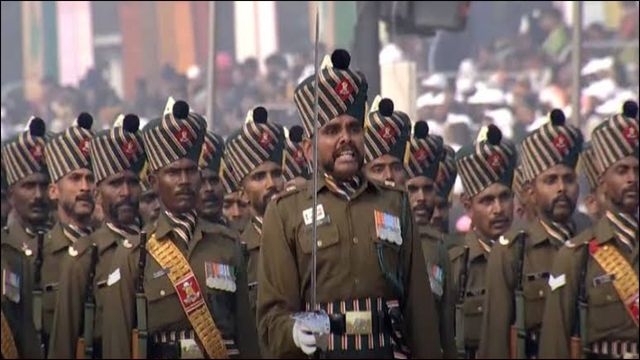
Instead of a lyrical marching song, the regiment moves to the Sanskrit shloka Swadharme Nidhanam Shreyaha from the Bhagavad Gita. This choice reinforces the belief that dying in the line of duty represents the highest honour a soldier can attain.
Rajputana Rifles: Faith as a Force Multiplier
Established in 1775, the Rajputana Rifles remain the Indian Army’s oldest rifle regiment. Their war cry Raja Ramachandra Ki Jai invokes Lord Ram as the embodiment of dharma, courage, and sacrifice.
The regiment’s quick march, rooted in British rifle traditions, emphasises speed and silence. From Khadki in 1817 to Kargil in 1999, this war cry has echoed across battlefields, forging unity among Rajput soldiers bound by honour and devotion.
Rajput Regiment: Victory Everywhere
The Rajput Regiment, formalised after Independence but tracing its roots to 1778, marches under the proud motto Sarvatra Vijay. Its war cry Bol Bajrang Bali Ki Jai draws strength from Hanuman, symbolising fearlessness and unwavering resolve.
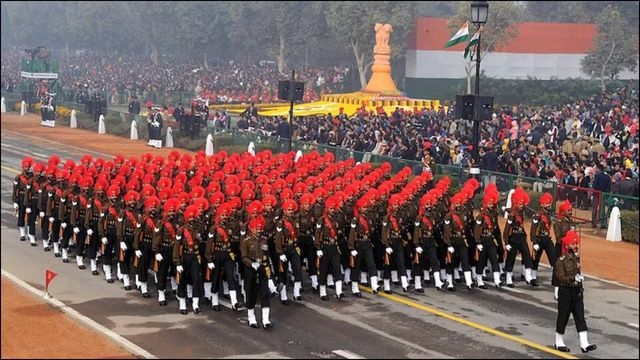
Instrumental marches heavy with bugle calls dominate the regiment’s ceremonial tradition. These sounds reinforce discipline during parades and training, particularly at Fatehgarh.
Maratha Light Infantry: Echoes of Shivaji’s Legacy
Raised in 1768, the Maratha Light Infantry stands as the Indian Army’s senior-most light infantry regiment. Its war cry Har Har Mahadev and the chant Bolo Shri Chhatrapati Shivaji Maharaj Ki Jai directly link the modern soldier to the legacy of Maratha warriors.
The regimental song Mard Aamhi Marathe Khare celebrates courage, pride, and the duty to defend the nation, carrying values from the forts of the Deccan into contemporary battlefields.
Kumaon Regiment: Folk Song Turned War Anthem
The Kumaon Regiment’s adoption of Bedu Pako Baro Masa offers a striking example of folk culture becoming military heritage. Composed in the early 1950s and later praised by Jawaharlal Nehru as one of India’s finest folk songs, the regiment eventually embraced it as its own.
Combined with the war cry Kalika Mata Ki Jai, the song transforms longing, hardship, and regional identity into collective strength, particularly during long marches and high altitude deployments.
Gorkha Rifles: Ayo Gorkhali and the Call of Fearlessness
The seven regiments of the Gorkha Rifles enjoy global renown for bravery. Their war cry Jai Maa Kali, Ayo Gorkhali does more than motivate; it instils fear in adversaries.
Marches such as Yo Nepali Shir Uchali and the adapted Scottish tune A Hundred Pipers blend Nepali pride with martial rhythm. Played by pipe bands, these tunes steel nerves before combat and reinforce the Gorkha creed that honours death over cowardice.
Sikh Regiment: War as Sacred Duty
Established in 1846, the Sikh Regiment stands apart for its seamless fusion of spirituality and soldiering. Its war cry Jo Bole So Nihal, Sat Sri Akal and regimental march Deh Shiva Bar Mohe from Guru Gobind Singh’s Dasam Granth frame battle as righteous duty.
Here, music does not merely motivate. It invokes faith and reminds the soldier that courage and belief remain inseparable.
Naga Regiment: Integrating the Warrior Hills
Raised in 1970, the Naga Regiment symbolises national integration. With the war cry Jai Durga Naga, it channels traditional warrior spirit into disciplined military service. Although the regiment lacks an official song, it forges its identity through resilience and loyalty drawn from Nagaland’s tribal heritage.
Dogra Regiment: Duty Before Death
The Dogra Regiment, formalised in 1877, marches to Dikhi Lai Dogra Des, composed by Maharaja Dr Karan Singh in 1949. Unlike satirical marching songs, this composition celebrates land, heritage, and honour.
Its war cry Jawala Mata Ki Jai and the motto Kartavyam Anvatma reinforce a simple creed. Duty stands above life itself.
Across India’s 27 infantry regiments, each comprising battalions of 800 to 1,000 soldiers, war cries and songs continue to perform vital operational and psychological roles. They synchronise movement, reduce fear, reinforce discipline, and most importantly, bind individuals into a collective willing to fight and, if required, die together.
Written by

Kewali Kabir Jain
Journalism Student, Makhanlal Chaturvedi National University of Journalism and Communication