Assam Passes Uniform Civil Code Bill Amid Opposition Protest
Assam Assembly passes the UCC Bill after heated opposition protests, introducing rules on marriage registration, inheritance, divorce, and live in relationships.
Total Views |


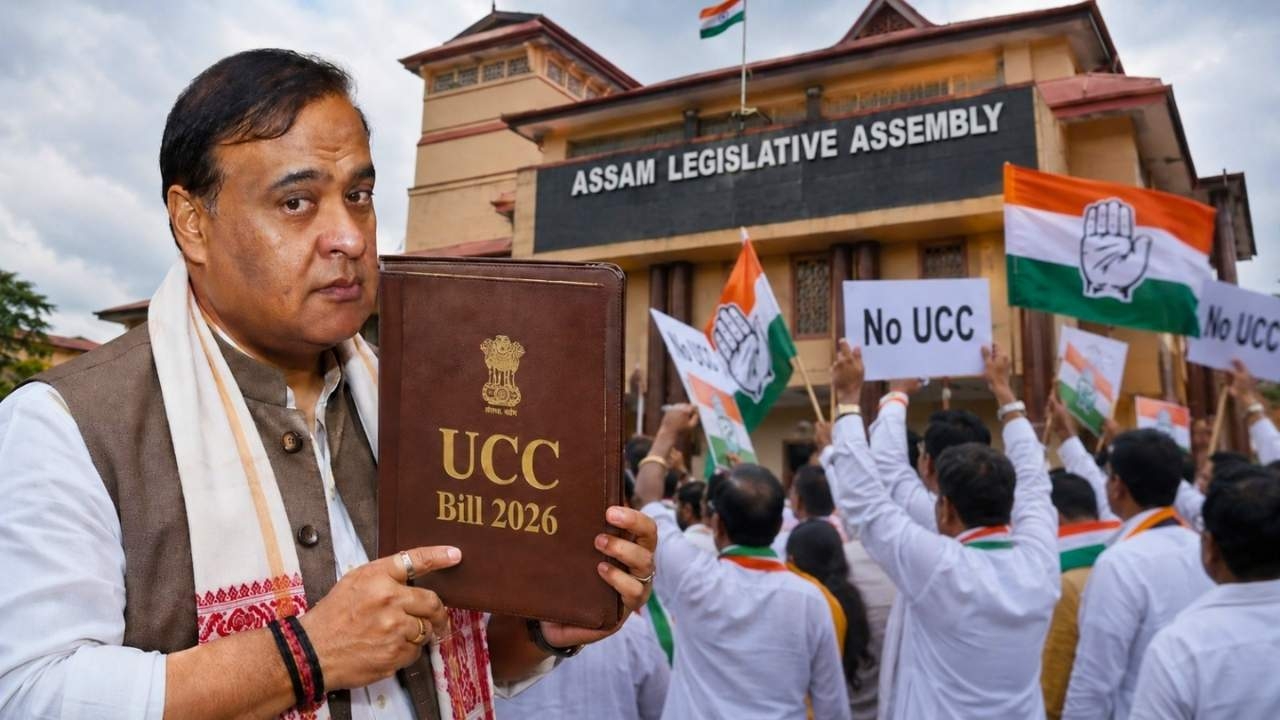
The political debate around the Uniform Civil Code (UCC) took a major turn this week after Assam officially became the third Indian state to pass a UCC law. The Assam Assembly cleared the bill on Wednesday, 27 May 2026, marking another significant step in the BJP's broader push for a common civil framework across Bharat.
The Uniform Civil Code Bill was introduced in the Assembly on Monday by the BJP-led Assam government and was passed after intense debate and uproar from opposition parties, which demanded that the legislation be referred to a select committee for further examination.
The passage of the bill is being viewed as one of the most politically significant decisions taken by the Himanta Biswa Sarma-led government ahead of the 2026 Assam Assembly elections. The BJP had prominently included the implementation of the UCC in its election promises, positioning it as part of its larger agenda of legal uniformity and social reform.

The draft legislation had already received approval from the Assam Cabinet earlier this month during its very first meeting after the Assembly elections. With the Assembly now passing the bill, Assam joins Uttarakhand and Gujarat in adopting state-level Uniform Civil Code legislation.
The new law seeks to establish a single civil legal framework for all residents of Assam, regardless of religion or community. The legislation covers key aspects of personal law, including marriage, divorce, succession, inheritance, and live-in relationships.
One of the most significant provisions of the bill is the ban on polygamy. The law also makes registration mandatory for both marriages and live-in relationships. Under the provisions of the legislation, marriages must be registered within 60 days of the ceremony, while couples in live-in relationships are required to register within 30 days.
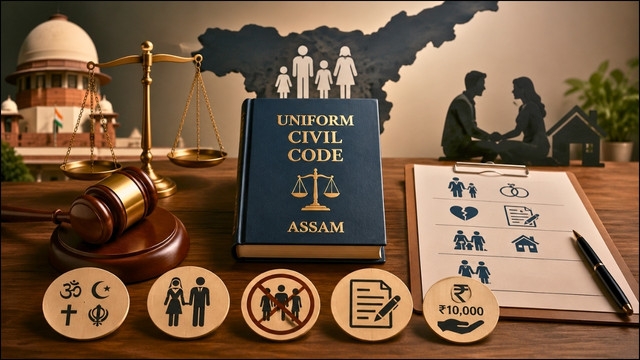
The Assam government has also introduced penalties for non-compliance. According to the bill, individuals who fail to register marriages or divorces within the prescribed time frame may face a fine of Rs 10,000. The government argues that mandatory registration will help improve legal transparency, strengthen women's rights, and reduce disputes related to marital status and inheritance.
Supporters of the legislation have described the bill as a move towards equality before the law and a step towards modernising Bharat's civil framework. Critics, however, argue that the UCC remains a deeply sensitive issue in a diverse country like Bharat, where personal laws have historically been linked to religious and cultural identities.
The passage of the Assam bill has once again reignited the national conversation around the Uniform Civil Code (UCC), an issue that has remained politically and constitutionally significant for decades. Under Article 44 of the Indian Constitution, the State is directed to endeavour towards securing a Uniform Civil Code for citizens across the country. However, the provision falls under the Directive Principles of State Policy, meaning it is not legally enforceable.
Bharat's Parliament has not yet enacted a nationwide Uniform Civil Code, which means states must individually pass their own legislation if they wish to implement such a framework.
The journey of state-level UCC laws began when Uttarakhand became the first Indian state to pass the Uniform Civil Code Bill in February 2024, with the law coming into effect on 27 January 2025. Gujarat later followed on 24 March 2026, becoming the second state in the country to enact the law. Assam has now secured the third position on that list.
The passage of the bill in Assam is likely to carry both political and legal implications in the months ahead. While the BJP sees the move as a fulfilment of its ideological commitment, opposition parties continue to question both the intent and the implementation of the legislation. Nevertheless, Assam's decision has further intensified the national debate over whether Bharat is gradually moving towards a nationwide Uniform Civil Code.
Written by

Mokshi Jain
Sub-editor, The Narrative