1956: Report of the Christian Missionary Activities Enquiry Committee (Part 6)
How the 1956 inquiry balanced constitutional religious freedom with the State’s power to curb coercion, undue influence and threats to public order.
Total Views |


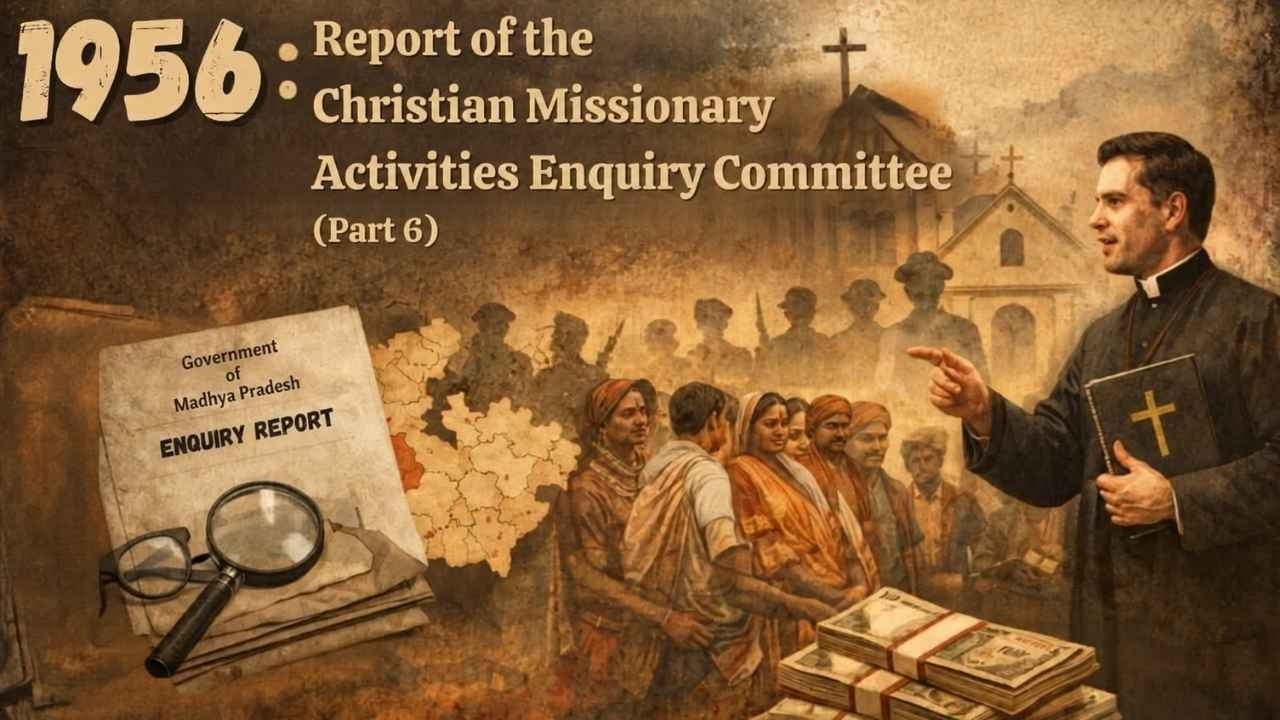
The 1956 Report of the Christian Missionary Activities Enquiry Committee examined missionary activities in Madhya Pradesh alongside the constitutional protections granted to religious belief and practice. While recognising freedom of conscience and the right to profess, practise and propagate religion, the report argued that these freedoms were not absolute and that the State could regulate activities involving coercion, undue influence or threats to public order.
The report also examines religious liberty within the framework of the Indian Constitution. The Constitution guarantees every citizen social, economic and political justice; liberty of thought, expression, belief, faith and worship; and equality of status and opportunity, without discrimination on grounds such as caste, creed or colour.
Religious liberty is also constitutionally guaranteed. It includes freedom of conscience and the right to profess, practise and propagate religion. Religious denominations have the freedom to manage their religious affairs, while religious and linguistic minorities have the right to establish and administer educational institutions of their choice.
Obviously freedom is not absolute, it comes with some restrictions that are necessary for the welfare of the state. The report states that the state is not prohibited from making any law that restricts any activity, and the rights related to religious matters are subject to public order, morality and health.
There is no state religion, so religious instructions cannot be provided by the institutions maintained by state funds. On the other hand private institutions may impart religious instructions but within the limits of the Conscience Clause. Religious instructions may be imparted to minors with the consent of the guardian.
Admission cannot be denied on the grounds of religion, race, caste or language, if the institutions enjoy government aid. Even the state cannot discriminate on the above mentioned basis.
Equal opportunity is provided to all in the State institutions. Even the state doesn’t discriminate against any kind of minority institutions in granting aid.
Our preamble is wedded to secure Justice, Library, Equality, Fraternity for all the citizens.
Foreigners too are given some rights, but of course their rights and duties are different from the citizens of the country. Equal protection is given to both, freedom of Conscience is the same for both.
Obviously some rights are conferred on citizens only, like freedom of speech, to assemble peacefully without arms, to form associations or unions. They can move freely throughout the country, reside and settle in any part of the country. Right to property, practice any profession, or occupation, trade or business is enjoyed by citizens only, but are subject to some limitations too.
We are not a theocratic state, (no state religion) we are a secular state. So the rights are not denied on the basis of religion.
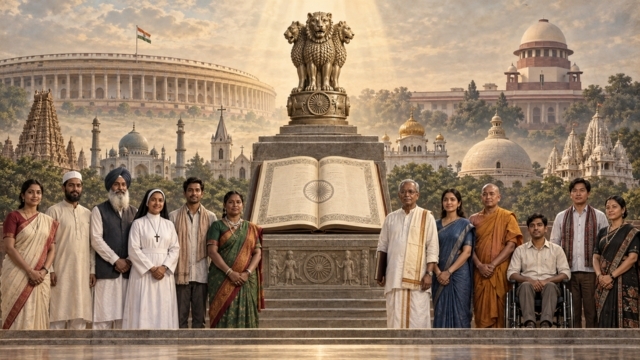
All the religions are respected, no religion is viewed with disfavour as is the case with Communist countries.
Our citizens follow multiple religions, the nation seeks ‘unity in diversity’. Gandhi ji described this as mutual respect and tolerance. He believed the soul of religions is one.
Our constitution doesn’t allow any religion to ignore it, if any activity of any group threatens the public order of solidarity of the country the state is supposed to step in. Of course it is accepted that full implications will evolve with time.
One is allowed to propagate, the word ‘convert’ is not used. It is clearly stated in the report that mass conversion was a part of the Christian Missionaries in the country. The constitution is carefully drafted, so no unlimited right to conversion is given. Mass conversion using undue influence by using money or pressure or any other means is supposed to be regulated by the state. Tolerance doesn’t imply conversion.
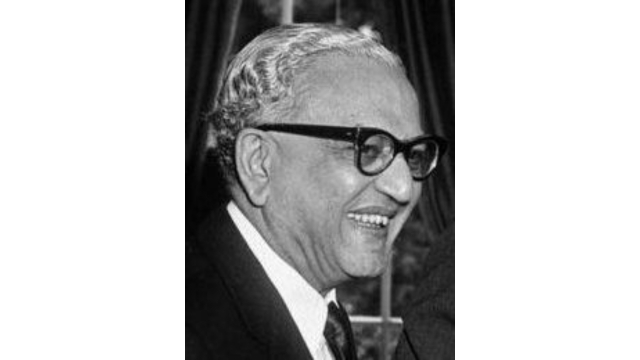
Religious freedom is not unrestricted, not every religious activity is interfered with, stated Chief Justice M.C Chagla. This has been made absolutely clear by the report repeatedly.
The State Legislature has the power to legislate or regulate or restrict activities associated with religious practices. (Even the economic, financial, political or secular activities are covered). The state can pass legislation for social welfare and reforms.
In countries like the US and Australia literal interpretation of the Bible is treated as fundamental to religious beliefs. Thus, the provision of religious protection is not absolute.
The report gives a full account of Missionary activities in Madhya Pradesh since independence which is supported by oral and documentary evidence. They have to be viewed carefully.
Written by
Professor Vidya Deshpande