1956: Report of the Christian Missionary Activities Enquiry Committee (Part 5)
Why did the 1956 committee examine religious liberty beyond Bharat, and what did its comparisons reveal about state policies and missionary activity?
The Narrative World 27-Jun-2026
Total Views |


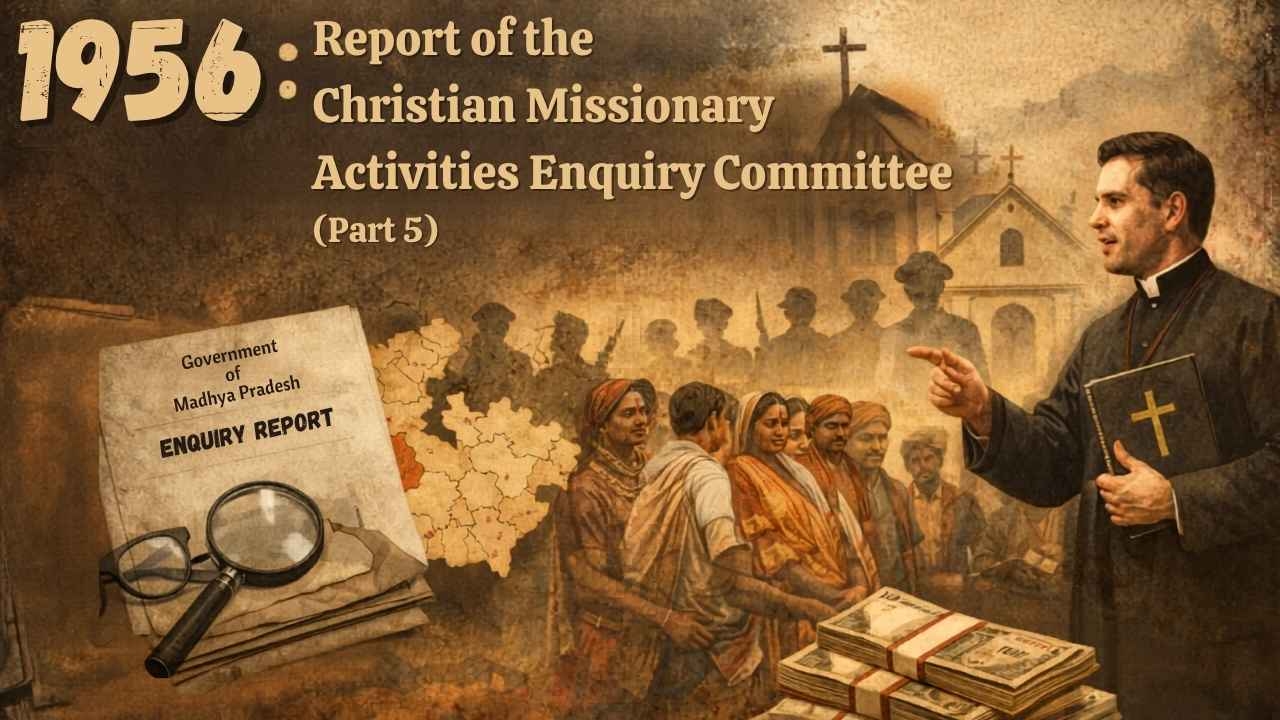
Bharat as a nation is always criticised for being intolerant, especially in the context of minorities. Our ranking is often found to be behind nations such as Pakistan. Therefore, this part of the report makes for an interesting read, as it gives an account of religious liberty in Western nations as well as in countries where Islam is the state religion. The examples of Japan and China are also noteworthy.
The question of religious liberty in Great Britain is to be viewed in relation to the Church of England. It is the national church. The King and the Lord Chancellor are necessarily members of the Church of England. The Church also possesses properties and endowments.
State schools do not provide religious education, but it was suggested that Christian faith and morals should be made a compulsory subject, subject to a conscience clause.
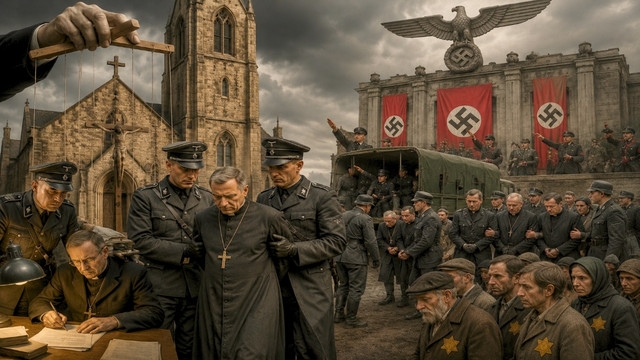
Germany had a history of state domination over religious institutions, particularly the Church as an institution. The Church was expected to introduce the principles of National Socialism. Obviously, there was hardly any religious liberty. By 1934, more than 1,000 pastors had been arrested and subjected to police investigations. In 1935, around 700 pastors were arrested, while the Gestapo, the secret state police force of Nazi Germany that served as an instrument of terror to hunt down or suppress dissidents, visited more than 5,000 other people.
It is well known that Jews were subjected to untold oppression in Germany.
In the USA, although religious freedom is guaranteed, Christianity prevails and its influence cannot be ignored. Every individual has the right to worship and serve God according to his or her conscience, and no one can be deprived of this right.
There is to be no discrimination on the basis of religion, as it is treated as a birthright of citizens. However, the very essence of moral law is based on the Church as an institution. Half of the Ten Commandments are reflected in the statute books. Christianity forms a part of the law of the land.
Public schools generally prohibit religious instruction, but private schools enjoy greater freedom. The belief that religious instruction contributes to character building has been growing, leading to a demand for non-controversial religious and moral education in state schools as well. There is also supposed to be an unequivocal separation of Church and State. Therefore, public school properties are not to be used by religious institutions or for proselytism.
The report also provides a very interesting account of the position in other countries.
Japan and China allow freedom of religious belief within certain limits. Such freedom must remain consistent with the duties of an individual towards the State and with the laws of the land.
In Japan, the Emperor is regarded as the supreme authority in both temporal affairs and spiritual matters.
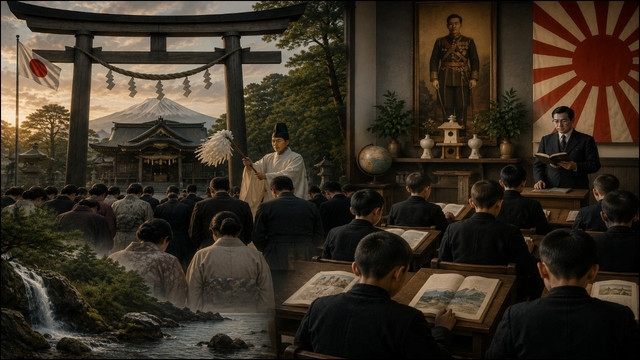
Shinto is the state religion and is a nature-based faith. Rejecting it is regarded as an act of treachery or disloyalty towards the Empire and its divine ruler. Textbooks are uniform and are prepared by the Department of Education. They include civic and moral education.
China also has a somewhat similar definition of freedom of religious belief, provided that it is not inconsistent with the law. The teachings of Confucianism have a profound influence on social and ethical values as well as on the country's general culture. Although the public school system does not provide special religious instruction, higher educational institutions may offer certain elective courses in religion. At the same time, there is no permission to propagate religion through education, as it is believed that doing so creates division, rift and strife in society. Even permission to offer elective courses in religion is rarely granted.
The report summarises the manner in which Muslim countries view religious freedom.
According to the report, Islam governs all aspects of life and, consequently, religious liberty has little room within such a framework. Islam cannot be renounced, while conversion to Islam alone is permitted. The report further states that people are also lured through financial incentives.
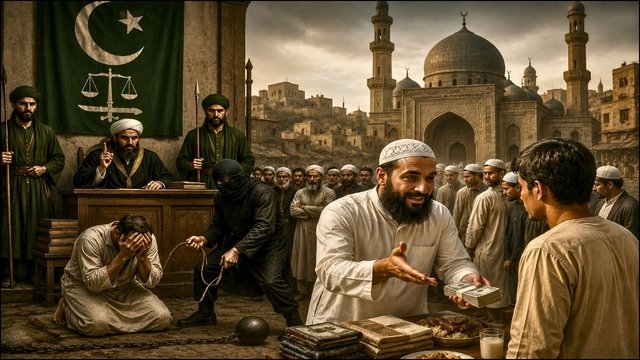
The propagation of Christianity and religious conversion are resented. Only pro-Islam propaganda is permitted and receives substantial government support. People are encouraged to embrace Islam. Discrimination, including economic discrimination against minorities, is stated to prevail openly in many Muslim countries.
In Egypt, Islam is the state religion. Introducing the teachings of any other religion to minors was treated as an offence against public order and morality. The educational, medical and social services provided by missionaries were appreciated only as long as they had no religious or political objective. Nevertheless, missionaries were generally viewed with considerable suspicion. Indirect control was exercised through the granting of visas and permissions for receiving funds from abroad.
Turkey allows religious freedom as long as it is not contrary to public order, moral principles or the law. Conversion is strictly discouraged. Anyone professing a religion other than Islam is regarded as a traitor.
Most Muslim countries seek national unity through a common Islamic culture. According to the report, this approach affects minorities across many Muslim-majority nations.
The report further states that it is believed that Muslims are superior to others in all aspects of life. According to the report, this belief leaves no space for any religion other than Islam and is said to prevail across Muslim countries.
At that time, the death penalty for conversion also existed in Afghanistan and Central Arabia.
The next part discusses the Indian position on religious liberty under the Constitution of Free India. Juxtaposing these perspectives provides an opportunity to better understand the position of Bharat.

प्रो. विद्या देशपांडे
Professor Vidya Deshpande has over four decades of experience in education. Her main expertise is philosophy; she taught philosophy and logic at Nowrosjee Wadia College for 36 years. She has been associated with the Janakalyan Blood Bank for the last 38 years and served as a management committee member of Karve Stree Shikshan Sanstha for 10 years. Her special fields of interest include the philosophy of social sciences, school education, development of self-reliance skills, and top-up skills to make students profession-ready.